

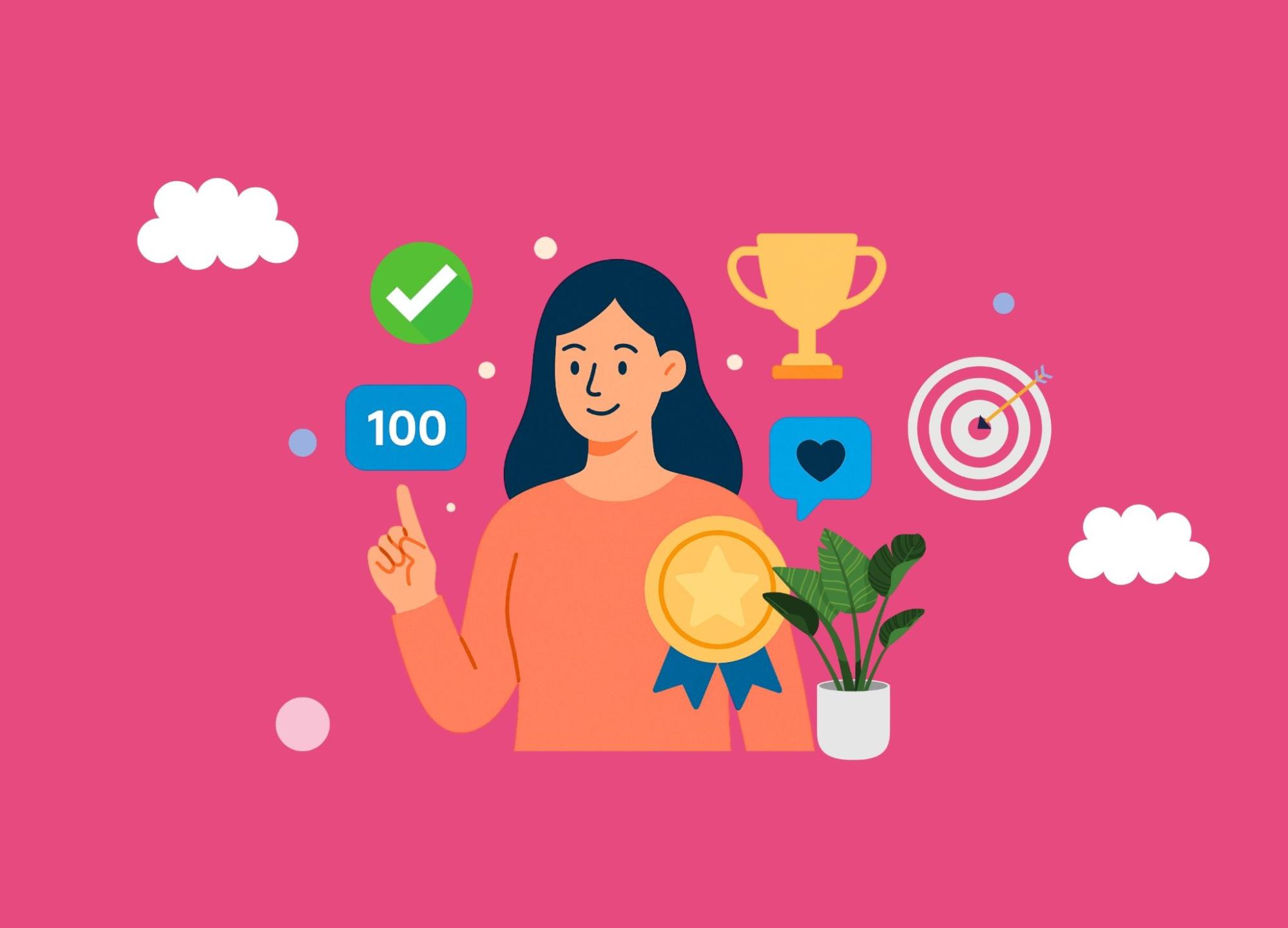
Gamification is when you take something that is not a game, like learning, working, or using an app, and add fun game-like elements to it. These elements can be points, badges, leaderboards, levels, or challenges. The idea is simple: games keep people interested, so we can use the same methods to make other activities more exciting.
Today, gamification and learning go hand in hand. Apps like Duolingo use streaks and badges to make language learning fun every day. Fitness trackers like Fitbit give you points and trophies when you walk more. Even workplaces and online courses use gamification and learning together to help people stay motivated and reach their goals.
But why do points and badges work so well? They have no real money value, yet people work hard to collect them and even feel proud to share their achievements. The answer is that human psychology points and badges make us feel like we are making progress, being noticed, and part of something bigger.
In this article, we’ll look at why gamification and learning are so powerful, how they affect the brain, and how teachers, businesses, and app creators can use them to keep people engaged for the long term.
The Science Behind Motivation
Before we talk about points and badges, we need to understand what makes people do things in the first place. Psychologists call this motivation the reason we take action.
A. Intrinsic vs. Extrinsic Motivation
Intrinsic motivation is when you do something because you enjoy it or find it meaningful. For example, painting because you love being creative or playing the guitar because it’s relaxing.
Extrinsic motivation is when you do something because you’ll get a reward or avoid a punishment. For example, studying to get a good grade or working overtime for a bonus.
Gamification and learning often work best when both motivations are combined. For example, learning a language might be fun on its own (intrinsic), but getting a “100-Day Streak” badge gives you an extra push (extrinsic).
B. Self-Determination Theory (SDT)
This is a famous psychology theory that says humans are motivated when three basic needs are met:
- Autonomy – the feeling that you’re in control of what you do.
- Competence – the feeling that you’re getting better at something.
- Relatedness – the feeling that you belong or connect with others.
In gamification and learning, points and badges mainly help with competence and relatedness. Seeing your score go up makes you feel skilled, and when others see it too, you feel connected.
C. Dopamine & Reward Loops
Our brains release dopamine (a “feel-good” chemical) when we experience something rewarding. Points and badges give small, frequent boosts of dopamine, which makes us want to come back.
This is similar to how people keep playing games or checking social media. Small rewards keep the brain engaged and looking for the next achievement.
In short, gamification and learning work well because they tap into how humans are built. We love to make progress, get recognition, and feel those little bursts of happiness when we earn rewards.
Why Points Motivate Users
Points may seem like simple numbers on a screen, but they trigger several powerful psychological effects.

A. Progress Visibility
People are naturally motivated when they can see they are moving forward.
Think about a fitness app that shows “You’ve walked 9,000 steps today.” Even if your goal is 10,000, seeing that number makes you want to finish.
Points make your progress visible and measurable, which pushes you to keep going.
B. Goal Setting Theory
Psychologists have found that clear, specific, and challenging goals make people more motivated.
Points help create these goals. For example:
- “Earn 500 points this week”
- “Reach 1,000 points to unlock the next level”
Breaking big goals into smaller point-based targets keeps people engaged and gives them constant wins.
C. Competition & Social Comparison
Humans naturally compare themselves to others; it’s part of social behavior.
Leaderboards use points to fuel friendly competition. For some people, knowing they are close to beating a friend’s score is enough to make them work harder.
However, it’s important to remember that not everyone likes competition. For some, it can feel discouraging if they’re always at the bottom.
D. Instant Feedback
Points tell you instantly how you’re doing.
Imagine you’re playing a quiz game and get points right after each question you know immediately if you’re improving. This is satisfying because your brain doesn’t like waiting for feedback.
Overall, points motivate us because they make progress visible, create achievable goals, tap into our competitive side, and give immediate feedback all of which make us want to keep going.
Why Badges Work as Motivation
If points are about numbers, badges are about symbols. They represent achievements in a way that feels more personal and lasting.
A. Symbolic Achievement
Badges act like trophies in the digital world. They’re proof that you did something worth recognizing.
For example, earning a “Master Coder” badge in a programming course can feel more rewarding than just having 5,000 points because it has a title and a story behind it.
In gamification and learning, points show progress in a clear, simple way. This makes you want to keep going until you reach your goal.
B. Milestone Recognition
People like celebrating milestones, birthdays, anniversaries, and promotions.
In gamification, badges mark key points in the journey:
- “First Quiz Completed”
- “100 Days of Learning”
- “5 Projects Submitted”
These milestones break the journey into stages, making long-term goals feel reachable.
C. Social Proof & Public Display
Badges are often visible to others on your profile, leaderboard, or social media.
When people see your badges, it works as social proof that you’re skilled or committed.
It can even inspire others to try to earn the same badge.
D. Endowment Effect
In psychology, the endowment effect means that once you own something, you value it more.
When you earn a badge, it feels like something you don’t want to lose.
This is why apps with “streak badges” often keep people coming back; they don’t want to break the chain.
Badges work because they’re more than just rewards; they’re personal, memorable, and often public. They turn progress into something you can proudly display.
In short, points work in gamification and learning because they make progress visible, set clear goals, encourage friendly competition, and give fast feedback, all of which make people want to continue.
Potential Downsides & Psychological Pitfalls
While points and badges can be powerful, they can also backfire if they’re not used well. Here are some common problems.
A. Over-Reliance on Extrinsic Rewards
If people are only doing something to get a reward (extrinsic motivation), they might stop when the rewards disappear.
For example, a student might only log into an online course to earn points, not because they care about learning. Once the points stop, so does the learning.
Studies have shown that too much focus on rewards can actually make people lose interest in the activity itself. This is called “crowding out” intrinsic motivation.
B. Badges Without Meaning
If badges are too easy to get or don’t represent real progress, they lose value.
Imagine getting a “Super Learner” badge just for opening an app once, it wouldn’t feel special.
Meaningless badges can make people feel like the system is fake or not worth their effort.
C. Leaderboard Anxiety
Leaderboards can push some people to try harder, but they can also make others feel discouraged.
If a user is always far behind, they might think, “What’s the point?” and stop participating.
This is especially true for beginners competing against experienced users.
The key takeaway: points and badges work best when they are earned through real effort, represent genuine achievement, and are designed to motivate all types of users, not just the most competitive ones.
Designing Points & Badges That Truly Motivate
To make gamification work for the long term, you need to design points and badges in a way that feels fair, exciting, and meaningful.

A. Align Rewards with Real Value
Give points for actions that truly matter.
For example:
- Completing a lesson or quiz
- Helping other users in a community
- Finishing a project
If you give points for actions that don’t help users grow, the points will lose their value.
B. Mix Fixed & Variable Rewards
A fixed reward is predictable, for example, “Earn 50 points for every quiz passed.”
A variable reward is a surprise, for example, “Random bonus badge for completing a lesson within 5 minutes.”
Mixing both keeps users excited and curious about what’s next.
C. Tiered Badge Systems
People like feeling they’re moving up in skill.
You can create badges in levels, such as:
- Bronze → Silver → Gold → Platinum
- Beginner → Intermediate → Expert
This encourages users to keep working toward the next level.
D. Personalization
Not everyone is motivated by the same things. Some people like competition, others like collecting badges, and others like private achievements.
If possible, let users choose what types of challenges they want or how they display their rewards.
E. Integrate Storytelling
Badges and points become more meaningful when they’re part of a bigger story.
For example:
In a fitness app, you might “travel” through famous landmarks as you log more miles.
In a coding course, you could “unlock” new kingdoms with each set of skills you master.
Storytelling makes rewards feel like part of a journey, not just numbers and icons.
By designing points and badges with real purpose, variety, levels, personalization, and storytelling, you can make gamification not just fun, but deeply motivating.
Real-World Examples & Case Studies
Let’s look at some popular platforms that use points and badges well.
Duolingo
Duolingo teaches languages with streaks, XP (points), and badges.
Why it works:
The streak system encourages daily learning, while XP gives visible progress. Badges mark important milestones like completing a skill tree.
Lesson:
Combine daily habits with milestone rewards.
Fitbit & Apple Watch
These fitness trackers reward users for hitting daily goals (steps, workouts, calories burned).
Why it works:
Points and badges are tied directly to health improvements, making them meaningful.
Lesson:
Rewards work best when linked to real-life benefits.
Stack Overflow
This developer Q&A site uses reputation points and badges for asking good questions, giving helpful answers, and contributing to the community.
Why it works:
Badges signal expertise and social value, not just activity.
Lesson:
Make badges represent genuine skill or contribution.
From these examples, the main idea is clear: successful gamification rewards consistent effort, real improvement, and community value.
The Key Takeaway
Points and badges might look simple, but they connect to something deep in the way people think and feel. They make progress easy to see, celebrate small wins, and give us an extra push to keep going whether it’s learning a language, getting fit, or joining an online community.
But points and badges are not magic. For them to work, they need to be earned in a real way, feel meaningful, and be balanced with the joy of doing the activity itself. If they are used poorly like giving badges that mean nothing or creating too much competition people can lose interest.
In the end, gamification and learning are about making everyday tasks more fun and engaging. When points and badges are used the right way, they not only keep people motivated they also inspire them to achieve more.
Turn Your Learning or Community Into a Game with BadgeOS
Do you want to keep your users coming back and motivated? BadgeOS lets you easily add points, badges, and achievement systems to your website or eLearning platform. It doesn’t matter if you’re running online courses or a membership site. BadgeOS can certainly give you the tools to create meaningful rewards that celebrate progress and spark engagement. Build streak systems, tiered badges, and custom challenges with no coding. With BadgeOS, gamification becomes simple and truly effective.


Leave A Comment