


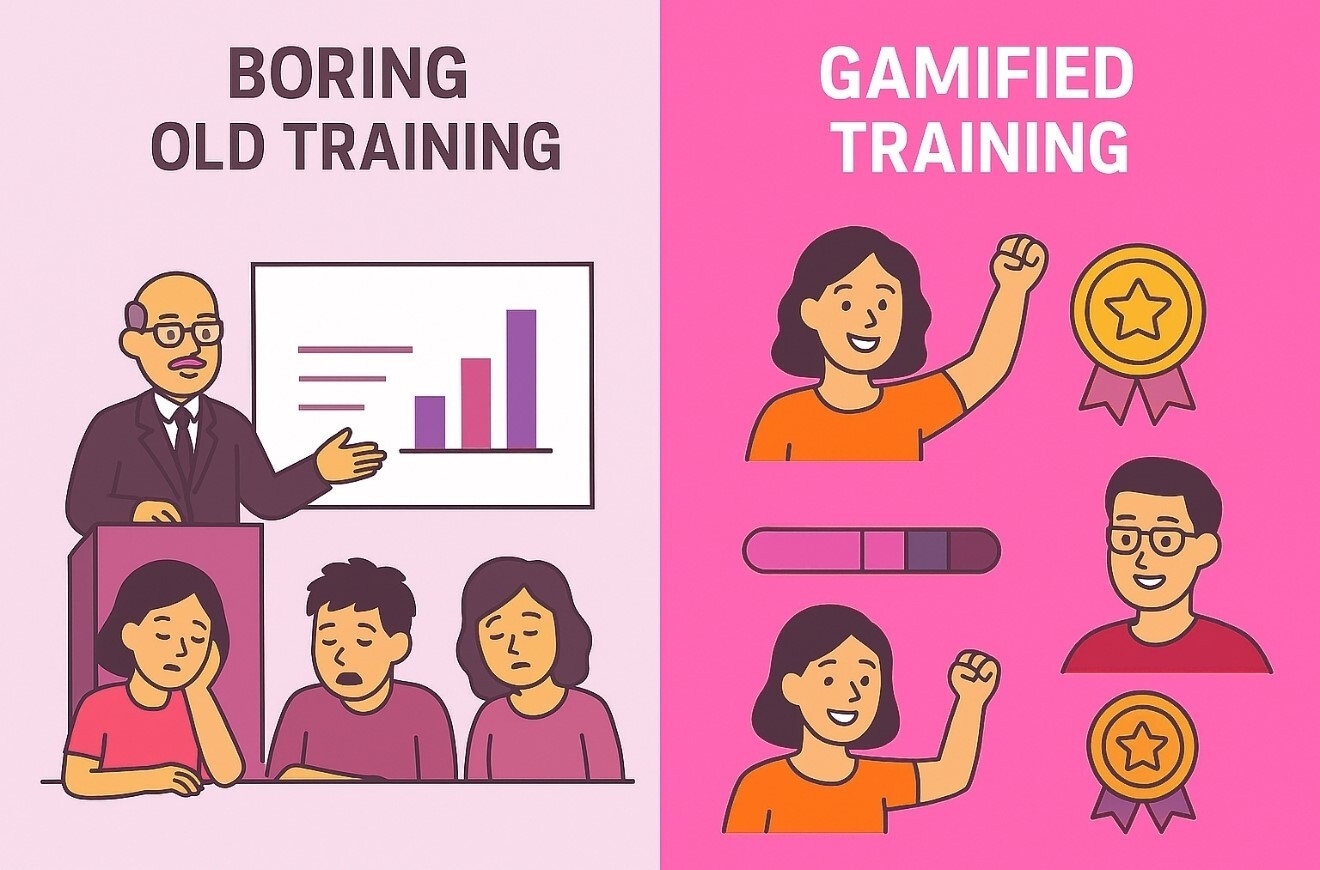
These days, it’s really hard to keep employees interested during training. Some of the Old School methods, like boring PowerPoint slides and long lectures, just don’t work well anymore.
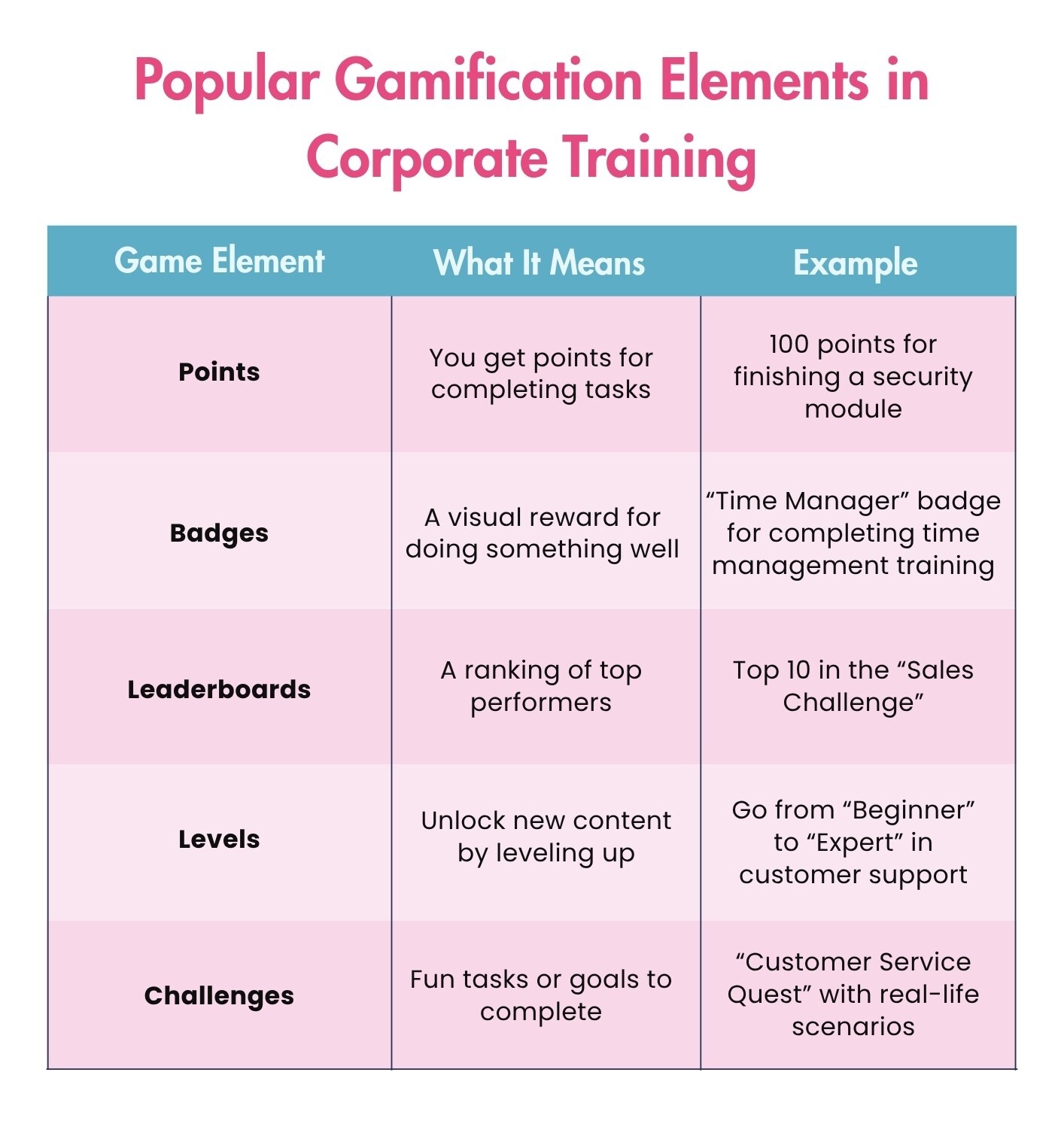
That’s where gamification comes into play. Gamification means to add more fun game-like elements such as levels, badges, points, challenges, and rewards into a non-game setting like corporate training. The idea is to turn a boring learning session into something that people (learners) actually enjoy doing.
So, instead of just sitting and listening, employees can get involved, interact with the training, and even compete with themselves or others.
Why Gamification Matters in Corporate Learning
Employees today are used to fun and interactive experiences from games and applications. When they come to a workplace training session, they don’t want to sit quietly and watch a slideshow. They want something that feels alive, engaging, and rewarding for them.
Gamification works well because it taps into what people love doing. For instance, people love to feel successful and compete with their fellow colleagues.
Some key reasons why gamification works so well in corporate training are because:
- It feels rewarding – People love to collect badges and earn points because it gives them a sense of success.
- It encourages friendly competition – Competing with colleagues in a healthy way can push everyone to do their best.
- It turns passive learning into active learning – Employees don’t just sit and listen. They also interact and participate with everyone.
When it’s applied effectively, gamification can:
- Help employees finish their training
- Get more people involved in lessons
- Encourage employees to learn through rewards and feedback
- Build a culture of continuous learning
How Gamification Helps People Learn Better
Let’s break down the main reasons why gamification works so well for learning in the workplace:
1. Instant Feedback
In normal training, you might only know your results at the very end. But with gamification, you earn points, badges, or scores right away and also get instant feedback.
This helps you to see where you are doing well and it also shows where you can improve instantly.
Example: In a product training quiz, if you get a question wrong, you can see the correct answer right away and try again.
2. Progress Tracking
People like to know how far they’ve come. Progress bars and levels show how far someone has come. It can help keep people going and reduce dropouts.
This helps reduce dropouts because people feel encouraged to keep going and it also makes the learning path clear.
Example: If an employee sees they are 80% done with a compliance course, they’re more likely to finish it in one go.
3. Recognition and Rewards
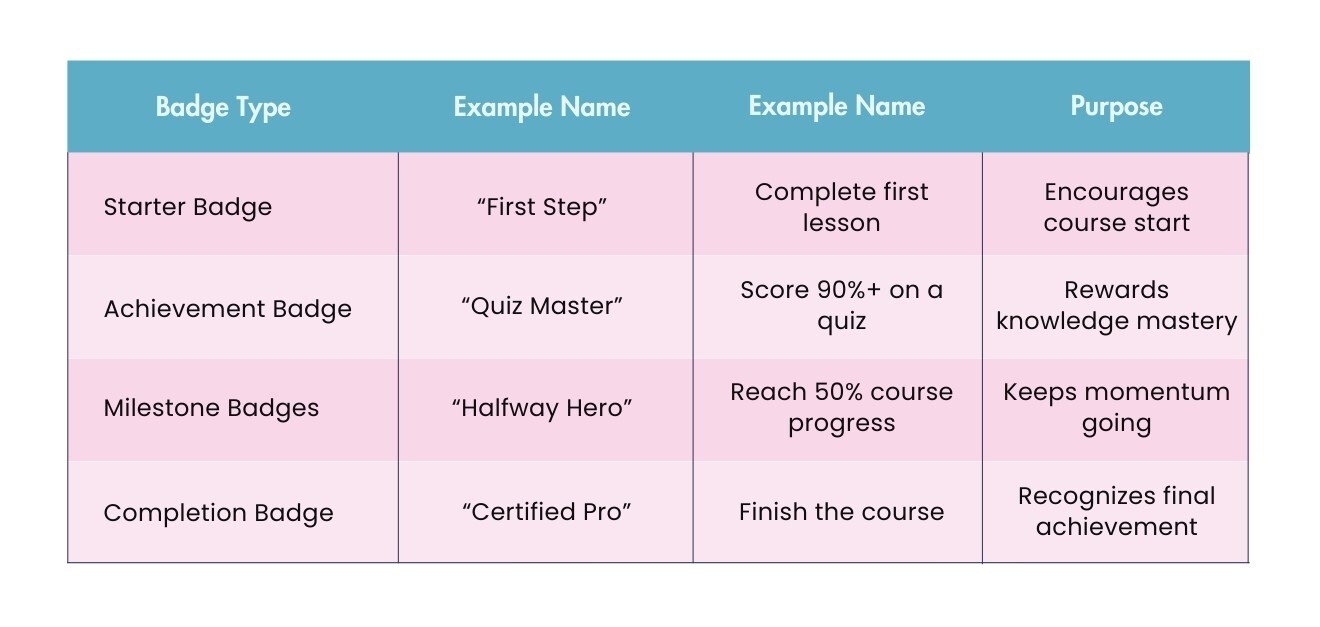
Even small achievements matter. So, earning a badge for completing the first module or a certificate for passing a quiz makes people feel proud of themselves even for small wins.
Recognition can be public, such as leaderboards, or private, such as an email from HR. Either way, it makes employees feel valued.
Example:
Imagine Sarah, a new marketing assistant, is taking her first corporate training course. After finishing the first module, she earns a “Getting Started” badge. The badge then appears on the company’s training leaderboard, and HR also sends her a congratulatory email that says, “Great job, Sarah! You’re off to a fantastic start.”
This small gesture will certainly make Sarah feel noticed and appreciated, which motivates her to keep learning and complete the rest of the course.
4. Friendly Competition
Leaderboards or team challenges can certainly push people to do better in a fun way. Competition pushes people to work harder and it also creates a sense of teamwork when group goals are involved.
Example: Two sales teams compete to earn the most points by finishing product knowledge modules. The winning team gets a small prize.
5. Safe to Fail
Gamified lessons let employees try, fail, and even try again without any real-world risk. Employees can try, fail, and even try again without worrying about real-world consequences.
This will help build confidence and also encourage experimentation.
Example: In a leadership training simulation, a manager can make a “wrong” decision, see the outcome, and learn from it all without affecting the real company.
Real Examples of Gamification at Work
Here are some simple examples of how gamification is used in different types of corporate training:
New Employee Training (Onboarding)
Gamified onboarding modules guide new hires through the company policies and culture.
Over here, they can earn badges for completing sections, which will then help them feel welcome and motivated.
Sales Team Training
Sales reps earn points or badges for completing product knowledge lessons. So, the more they learn, the better they perform in real sales situations.
Compliance Training
Compliance courses are often dull but really important. So, it’s important to add quizzes, track the progress, and offer rewards to make them more engaging.
Leadership Training
Role-play games or decision-making challenges teach managers how to handle different
workplace situations. They can practice in a safe, controlled environment.
Common Mistakes to Avoid in Gamification
Even though gamification is powerful, it can fail if not done correctly. Here are some of the common mistakes companies make:
- Focusing too much on badges and points instead of actual learning.
- Making it too complicated with too many rules or features.
- Not aligning rewards with goals – every point or badge should help with learning.
- Ignoring different learning styles – competition may work for sales, but not for all departments.
- Failing to track results – without data, you won’t know if gamification is working.
Tips for Using Gamification in Corporate Training
1. Start With Clear Learning Goals
Make sure that every point or badge helps the person learn. So, don’t add fun stuff just to look cool.
2. Know Your Learners
A competition might work for sales teams, but not for every department. So, you should use the right style for each group.
3. Keep It Simple
Don’t make it too complicated. You can just start with points or badges and then start to build from there.
4. Use Real-Time Data
Check how people are doing. Are they finishing more lessons? Or are their scores going up?
5. Celebrate Wins
Don’t keep badges hidden! Show off people’s achievements in meetings or team chats. This will certainly help keep them motivated.
Why Gamification Is Good for Business
Gamification isn’t just fun. It also gets real results. According to the TalentLMS Gamification Survey, 83% of employees who receive gamified training report being more motivated at work.
Research by Professor Traci Sitzmann of the University of Colorado found that learners using simulation-based or gamified training showed:
- 14% higher skill-based knowledge
- 11% higher factual knowledge
- 9% higher retention rates
Additional case studies, such as those that have been reported by Gametize, show that organizations that implement gamified training can see productivity improvements of up to 50%, as well as increased learner satisfaction and retention.
Tools That Make Gamification Easy
Popular platforms like LearnDash, TalentLMS, SAP Litmos, or Docebo offer built-in gamification features such as:
- Progress bars
- Badges and points
- Leaderboards
- Certificates
So, if you use WordPress, a plugin like BadgeOS will certainly work great with LearnDash to add gamification easily.
The Future of Gamification in Corporate Learning
Gamification will continue to grow in corporate training. In the near future, we’ll see:
- Virtual reality (VR) training games for realistic simulations.
- AI-powered adaptive learning that gives personalized challenges.
- Mobile-first gamification so employees can train anywhere.
- Social learning features where employees can collaborate and compete online.
In short, the future of gamification in workplace training will make learning more real, more personal, easier to do anywhere, and more social, so employees actually enjoy it.
The Key Takeaway (Turn Training Into a Win-Win With Gamification)
Gamification isn’t about turning work into a video game. It’s also about making learning more rewarding and more effective. So, when it’s done right, it can certainly turn even the most mundane training into an experience that employees look forward to. Now’s the time to ditch the old school training methods and start to design learning experiences that your employees will actually enjoy.
Level Up Your Training And Start Gamifying with BadgeOS Today!
So, are you ready to gamify your employee training? Make learning fun and measurable with BadgeOS. It’s definitely the ultimate gamification plugin for WordPress and LearnDash. It doesn’t matter if you’re onboarding new hires or rolling out compliance training. BadgeOS can certainly let you reward progress with badges, points, levels, and leaderboards that keep employees engaged from the very beginning to the very end.
So, what are you waiting for? Don’t settle for boring training. Turn it into a game your team wants to play. Get started with BadgeOS today.


Leave A Comment